Restricted Entry UI

Back

Component Description(Generated by AI)

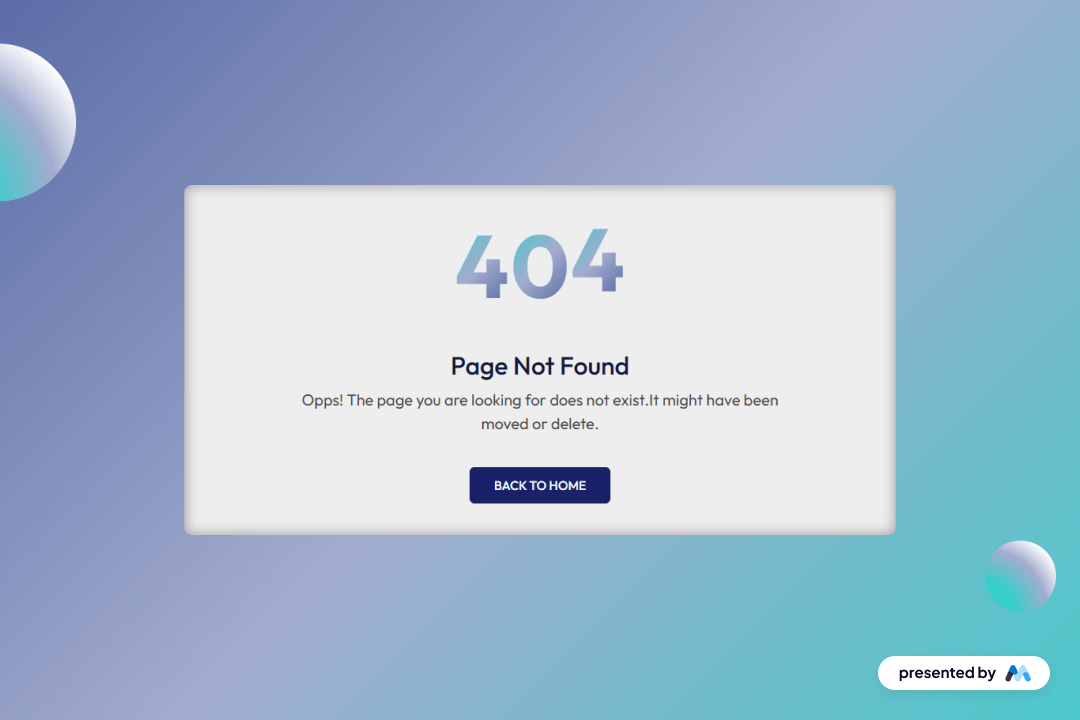
The Restricted Entry UI component is designed to provide a user-friendly interface for displaying restricted access messages, such as 'Page Not Found'. It features a visually engaging layout with customizable text and styles, making it suitable for various web applications. This component is a free resource for Webflow developers to use in their projects.

Key Features

  • Customizable error messages with options for different text sizes and styles.Responsive design that adapts to various screen sizes.Interactive elements such as a 'Back to home' link for user navigation.CSS animations for visual effects when scrolling into view.

Design Elements

  • Gradient backgrounds that enhance visual appeal, such as a linear gradient from #36cfc9 to white.Large, bold typography for error messages, utilizing classes like 'text-size-large'.Flexbox layout for centering content and ensuring proper alignment of elements.

Potential Use Cases

  • Websites that require a custom 404 error page.Applications needing a restricted access notification for users.E-commerce sites that want to inform users about unavailable products or pages.Blogs or content sites that may have moved or deleted articles.

Conclusion: The Restricted Entry UI component is a practical solution for managing user navigation errors, offering both aesthetic and functional benefits for web developers.

Related Components

More components you might find useful

Block Access
View Component
PaywallGated Content

Block Access

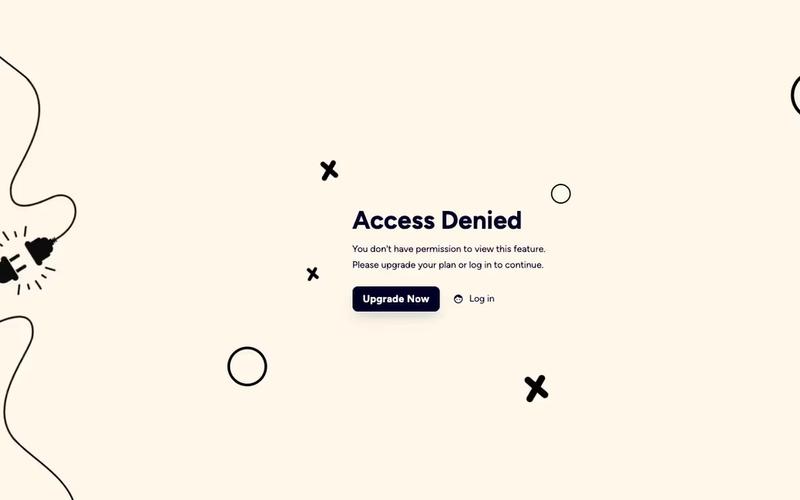
The Block Access component is designed to inform users that they do not have permission to access certain features, encouraging them to upgrade their plan or log in. It provides a clear and visually appealing message for restricted access. Key Features Responsive design suitable for various screen sizes Customizable text and links for user actions Includes visual elements such as icons and images Background image support for enhanced aesthetics User-friendly layout with clear call-to-action buttons Design Elements: Flexbox layout for centering content Soft color palette with a light background and dark text Use of icons for visual appeal Rounded button styles for a modern look Consistent typography with a focus on readability Potential Use Cases: Web applications requiring user authentication Membership sites with tiered access levelsE-commerce platforms with restricted product features SaaS products needing user upgrade prompts Educational platforms with course access limitations Conclusion: The Block Access component is a versatile solution for managing user access, effectively combining functionality with an appealing design to enhance user experience.
Elegant Access Denied
View Component
Gated Content

Elegant Access Denied

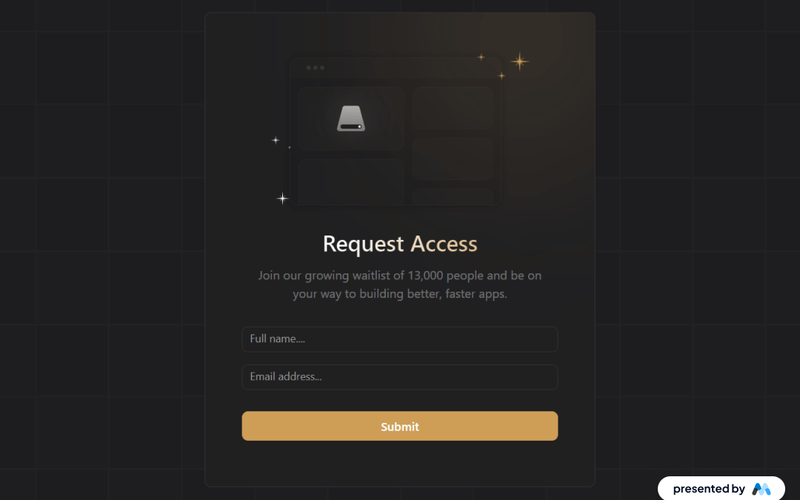
The 'Elegant Access Denied' component is designed to inform users that access to a specific resource is restricted. It features a visually appealing layout with a call-to-action for users to request access, making it suitable for applications that require user permissions or waiting lists. Key Features Includes a form for users to request access with fields for name and email.Displays a success message upon form submission.Provides an error message if the form submission fails.Utilizes responsive design principles to ensure usability across devices. Design Elements Dark background with contrasting text for readability.Flexible layout that centers content and adapts to screen sizes.Incorporates gradient backgrounds and rounded borders for a modern aesthetic.Uses icons and images to enhance visual communication. Potential Use Cases Web applications requiring user authentication or permissions.Membership-based services that need to manage access requests.Educational platforms where course access is restricted.Event registration pages that require approval for attendance. Conclusion: The 'Elegant Access Denied' component effectively combines functionality with a visually engaging design, making it a valuable addition for any application needing to manage user access.

Simple Gated Content Interface
View Component
Gated Content

Simple Gated Content Interface

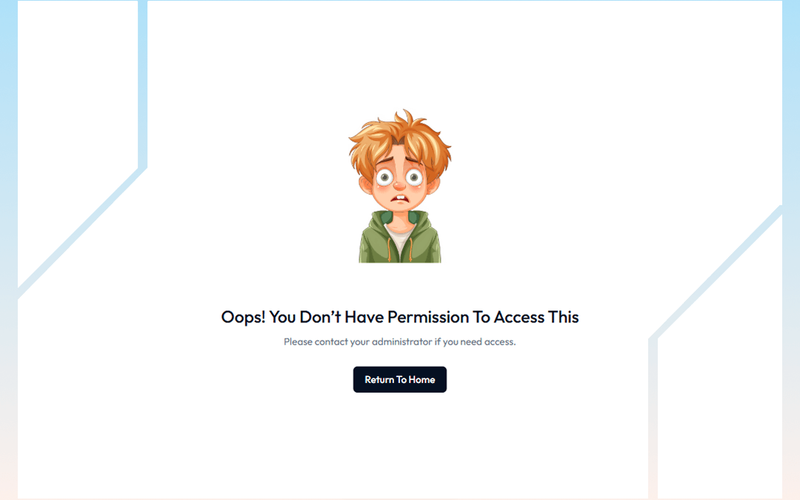
The Simple Gated Content Interface is designed to restrict access to certain content, prompting users to take action for access. It features a clear message indicating restricted access and a call-to-action button for users to return to the homepage. This component is a free resource for Webflow developers to use in their projects. Key Features Gated content access with a clear message: 'Oops! You don’t have permission to access this.'Call-to-action button labeled 'Return To Home' for easy navigation.Responsive design with flexible layout options.Customizable styles for text and buttons, including hover effects. Design Elements Centered layout with a flexbox structure for alignment.Use of a specific color palette, primarily dark blue for buttons and grey for text.Incorporation of an illustrative image to enhance visual appeal.Typography styles that emphasize clarity and readability. Potential Use Cases Membership sites requiring user authentication for content access.Educational platforms offering exclusive resources to registered users.E-commerce websites with gated promotional content for subscribers.Corporate intranets where sensitive information is restricted to employees. Conclusion: The Simple Gated Content Interface effectively combines functionality and design, making it suitable for various applications where content access needs to be controlled.

Access Denied Page
View Component
PaywallGated Content

Access Denied Page

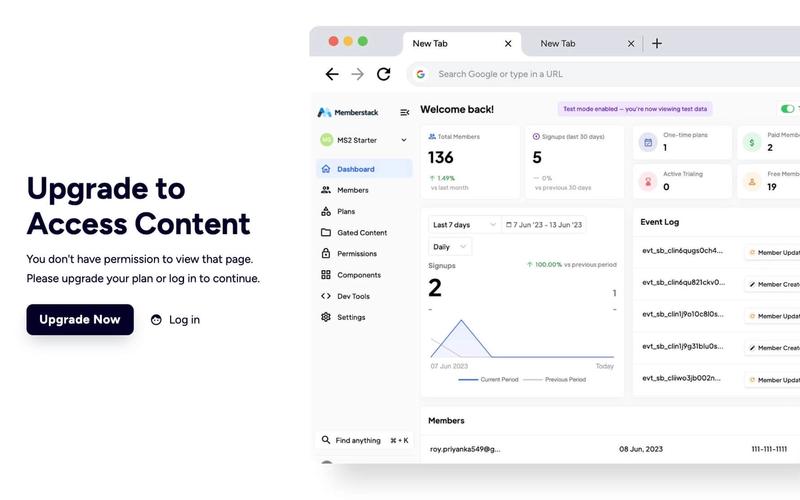
The Access Denied Page is designed to inform users that they do not have permission to view certain content, encouraging them to upgrade their plan or log in to access restricted areas. Key Features Responsive design suitable for various devices Clear messaging for users about access restrictions Call-to-action buttons for upgrading or logging in Customizable layout and styles Design Elements Clean and modern layout with a white background Use of contrasting colors for text and buttons Incorporation of icons for visual appeal Flexible grid layout for content organization Potential Use Cases Membership websites requiring tiered accessE-commerce platforms with exclusive content Educational sites with course restrictions Corporate intranets for employee access control Conclusion: The Access Denied Page is a versatile component that enhances user experience by clearly communicating access limitations while providing pathways for users to gain access, making it ideal for various online platforms.